
Premium Jequitiba Lumber
Servicing Global & Local Customers
Freight Shipping or On-Site Pickup Available
Family Owned Since 1947
Wholesale & Retail Exotic Lumber Sales
Request Quote
Hero Request Form
Thank you for contacting us.
We will get back to you as soon as possible.
Please try again later.
Jequitiba (Cariniana pyriformis and Cariniana)
Jequitiba (Cariniana pyriformis & Cariniana)
Newman Lumber Company
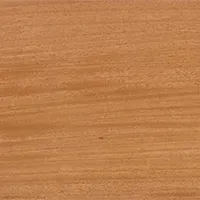
Jequitiba (Cariniana pyriformis & Cariniana)
Jequitiba works well with general construction and carpentry, furniture components, shipbuilding, flooring, veneer for plywood, and turnery.
- Family: Lecythidaceae
- Other Common Names: Abarco (Colombia), Bacu (Venezuela), Ceru, Jequitiba rosa, Jequitiba amerella, Tauary (Brazil) and Chilean Mahogany.
- Distribution: A genus of about 10 species distributed from eastern Peru and northern Bolivia through central Brazil to Venezuela and Colombia. Very common in forest of northern Colombia growing on lower slopes and well-watered valleys.
The Tree
A large tree, frequently 100 to 130 feet in height, with trunk diameters often 4 to 6 feet in diameter, boles are clear to 80 feet; large buttresses; well-formed stems.
The Wood
- General Characteristics: Heartwood reddish or purplish brown, sometimes with dark streaks usually not sharply demarcated from the pale brown sapwood; luster medium; texture medium; grain straight to interlocked; without distinctive odor or taste.
- Weight: Basic specific gravity (ovendry weight/green volume) 0.46; air-dry density 35 pcf.
- Drying and Shrinkage: Air-dries rapidly with only a slight tendency to warp or check. Kiln schedule T3-D2 is suggested for 4/4 stock and schedule T3-D1 for 8/4. Shrinkage green to ovendry: radial 2.8%; tangential 5/4%; volumetric 9.0%. Reported to have good dimensional stability after manufacture.
- Working Properties: Working properties generally satisfactory with only a slight blunting effect on cutting edges; but species in the grouping are also reported to cause rapid dulling of cutters. Silica is estimated to be in excess of 0.05%. Veneers reported to be cut without difficulty.
- Durability: Heartwood reported to be durable, particularly deeply colored material; has good resistance to dry-wood termite attack.
- Preservation: Heartwood is reported to be extremely resistant to preservative treatment; sapwood is permeable.
- Uses: General construction and carpentry, furniture components, shipbuilding, flooring, veneer for plywood, and turnery.
- Thicknesses: Available in 4/4, 6/4, and 8/4 Air Dried and Kiln Dried.
- Grade: Select & Better.
| Moisture Content | Bending Strength (psi) | Modules of Elasticity (1000 psi) | Max Crushing Strength (psi) |
|---|---|---|---|
| 12% (42) | 13,800 | 1,410 | 7,100 |
| Green (30) | 10,200 | 1,530 | 4,620 |
| 15% | 12,500 | --- | 6,320 |
- Bullet text
- Bullet text
- Bullet text
- Bullet text
- Bullet text
- Bullet text
- Bullet text
- Bullet text
- Bullet text
- Bullet text
What are the characteristics of Jequitiba wood?
Jequitiba is known for its light color, straight grain, and moderate durability.
What are common uses for Jequitiba?
Jequitiba is often used for interior trim, furniture, and general construction. Reach out to Newman Lumber Company today to get started!
Is Jequitiba resistant to decay?
Jequitiba has moderate resistance to decay and insects.

CP #1 Headline
CP #1 Body
CP #1 CTA Lead-in
Not valid with any other offers or promotions. Restrictions apply.
Must mention this coupon at the time of scheduling.
Gallery Heading H2

Jequitiba
We will get back to you as soon as possible.
Please try again later.