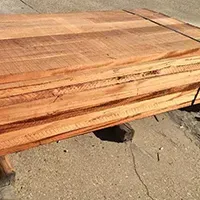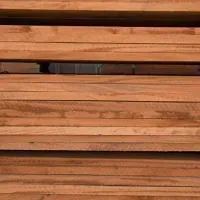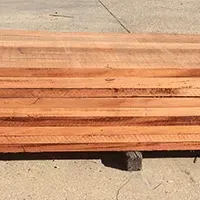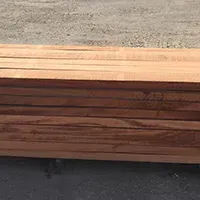
Premium African Mahogany

Servicing Global & Local Customers

Freight Shipping or On-Site Pickup Available 

Family Owned Since 1947

Wholesale & Retail Exotic Lumber Sales

Request Quote

Hero Request Form

African Mahogany (Khaya ivorensis and K. anthotheca)

African Mahogany (Khaya ivorensis & K. anthotheca)

Newman Lumber Company

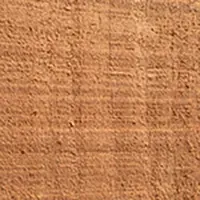
Close-up of rough, textured, light brown surface with subtle vertical striations and tiny dark specks.

African Mahogany (Khaya ivorensis & K. anthotheca)

  • Family: Meliaceae
  • Other Common Names: Often further classified as to port of shipment or country of origin; consignments to U.S. trade mostly K ivorensis. Munyama (Uganda), Acajou d’Afrique (Ivory Coast), Dubini, Dukuma fufu (Ghana), Ogwango (Nigeria).
  • Uses: Furniture and cabinet wood, boatbuilding, joinery, paneling, interior trim & shop fixtures.
  • Thicknesses: Available in 4/4, 6/4,8/4, and 16/4 Air Dried and Kiln Dried.
  • The Tree: Reaches heights of 180 to 200 ft; boles are straight, cylindrical, and clear to 90 ft; trunk diameters are 3 to 6 ft, buttressed.


The Wood

  • General Characteristics: Heartwood light pinkish brown darkening upon exposure to reddish brown; sapwood whitish or yellowish, not always sharply demarcated. Texture medium to coarse; grain straight to interlocked, producing a stripe figure; lustrous. Brittleheart present in some logs.
  • Weight: Basic specific gravity (oven dry weight / green volume) 0.44; air-dry density 32 pcf.
  • Mechanical Properties: (2-cm standard.) Janka side hardness 640 to 735 lb for green material and 830 to 860 lb for dry. Amsler toughness 178 in.-lb for dry material (2-cm specimen).
  • Drying and Shrinkage: Dries rapidly with little degrade. Kiln schedule T6-D4 is suggested for 4/4 stock and T3-D3 for 8/4. Shrinkage green to oven dry: radial 3/2%; tangential 5/6%. Movement in service is rated as small.
  • Working Properties: A cutting angle of 20 degrees in planning is recommended. Nailing and gluing properties are good, an excellent finish is readily obtainable. Easy to slice and peel.
  • Durability: Heartwood is rated as moderately durable, prone to buprestid and termite attack. Sapwood liable to powder-post beetle attack.
  • Preservation: Heartwood is extremely resistant to preservative treatments; sapwood moderately resistant.
  • Bullet text
  • Bullet text
  • Bullet text
  • Bullet text
  • Bullet text
  • Bullet text
  • Bullet text
  • Bullet text
  • Bullet text
  • Bullet text
Moisture Content Bending Strength (psi) Modules of Elasticity (1000 psi) Max Crushing Strength (psi)
Green (9) 7,700 1,080 3,680
12% 12,000 1,310 6,430
Green (9) 7,800 1,080 3,980
12% 11,300 1,300 6,730
12% (44) 10,000 --- 6,850
  • What are the common uses for African Mahogany?

    African Mahogany is often used for furniture, cabinetry, and high-end architectural woodwork. Reach out to Newman Lumber Company today.

  • How does African Mahogany compare to Genuine Mahogany?

    African Mahogany is generally harder and more durable than Genuine Mahogany, making it suitable for a wider range of applications.

  • Is African Mahogany resistant to decay?

    Yes, African Mahogany has natural resistance to decay and insects, making it a good choice for exterior applications.

CP #1 Headline

CP #1 Body

CP #1 CTA Lead-in

Not valid with any other offers or promotions. Restrictions apply.

Must mention this coupon at the time of scheduling.

(228) 226-1003

Gallery Heading H2

Close-up of rough, textured, light brown surface with subtle vertical striations and tiny dark specks.

African Mahogany